

TL;DR:
- A truly clean protein powder features a short ingredient list, no artificial additives, and batch testing for contaminants. Heavy metals remain a significant concern, especially in plant-based options and chocolate flavors, requiring verification through independent lab reports. Brands that provide transparent COAs and recognized certification seals offer the most trustworthy options for safe, reliable protein sources.
A truly clean protein powder has a short, transparent ingredient list, no artificial sweeteners or synthetic colors, and independent batch testing that confirms low contaminant levels. That’s the definition that matters in practice, even though “clean” carries no legal weight in the U.S.
What to do right now:
- Check the Supplement Facts panel and the “Other Ingredients” line before anything else. If you can’t pronounce half the list, that’s a signal.
- Look for NSF Certified for Sport, USP, or Informed-Sport seals, or download a batch-level Certificate of Analysis (COA) directly from the brand’s website.
- If heavy-metal exposure is a concern, favor whey or collagen isolates over plant-based blends, and lean toward vanilla over chocolate flavors.
- Ask the brand for a COA that shows batch number, lab accreditation (ISO/IEC 17025), and analyte results for lead, cadmium, arsenic, and mercury.
Table of Contents
- What does “clean protein powder” actually mean in the U.S.?
- Which contaminants show up in protein powders and why they matter
- How to evaluate a protein powder from the label and product page
- Which certifications and lab reports can you actually trust?
- Does protein source affect contamination risk?
- A 7-point checklist for buying a clean protein powder in the U.S.
- What the latest testing actually says
- Key Takeaways
- Why transparency is the only standard worth holding
- Hustlefuel PowerBlend: a clean whey isolate you can verify
- Primary sources and recommended reports
What does “clean protein powder” actually mean in the U.S.?
“Clean” is a consumer-driven term, not a regulated one. The FDA has not defined it, and no federal agency enforces it. What shoppers typically mean by a clean protein powder is a product with a minimal ingredient list, no artificial sweeteners or synthetic flavors, and a protein source that’s easy to trace. That’s a reasonable standard to hold brands to, but it’s one you have to verify yourself.
The regulatory reality is more limited than most people assume. Under the Dietary Supplement Health and Education Act (DSHEA), the FDA does not pre-approve most dietary supplements before they reach store shelves. Manufacturers are responsible for their own safety and labeling, and they must follow Current Good Manufacturing Practices (CGMPs). The FDA steps in after the fact, if a product is found to be adulterated or misbranded.
Supplement labels are required to include a Supplement Facts panel, a full list of other ingredients, and a domestic address or phone number for adverse event reporting. What they are not required to include is independent lab verification of what’s actually in the product. That gap is exactly why third-party testing matters so much.
Regulatory callout: Under DSHEA and CGMP rules, the burden of safety sits with the manufacturer, not the FDA. A product can legally reach your shelf without any pre-market testing by a federal agency.
Which contaminants show up in protein powders and why they matter
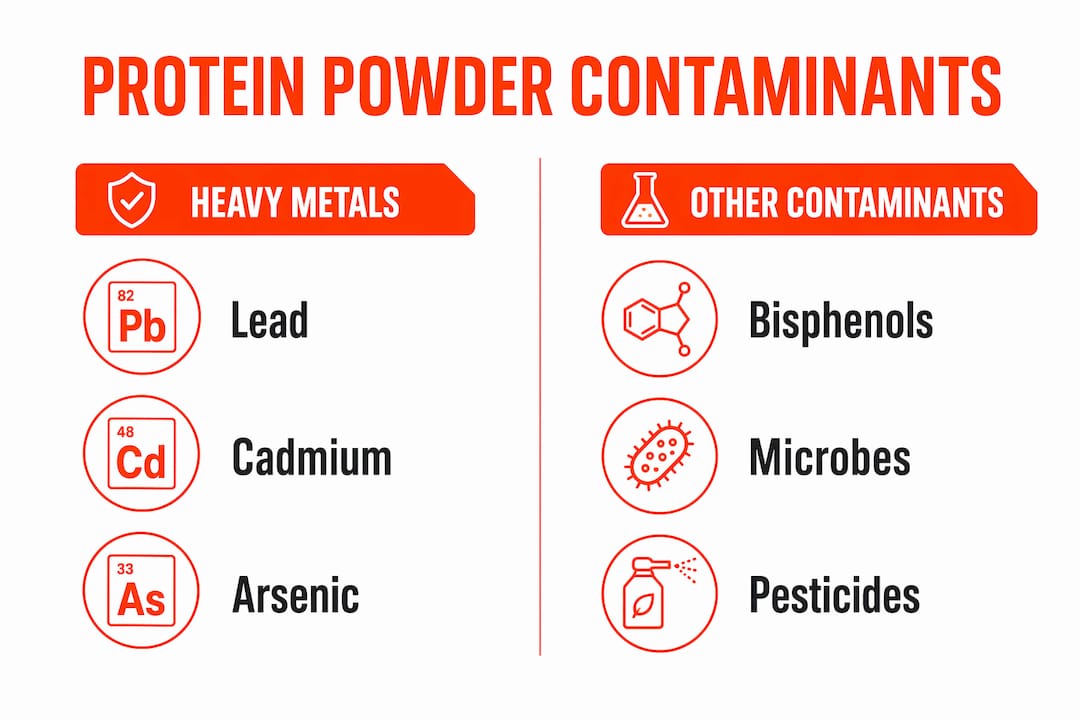
Heavy metals are the primary concern. Lead, cadmium, arsenic, and mercury can accumulate in plant-based ingredients through soil absorption, and they don’t disappear during processing. Chronic low-level exposure to these metals is linked to kidney damage, neurological effects, and developmental harm, which is why regulatory thresholds exist in the first place.

The Clean Label Project ran one of the most comprehensive independent assessments of the protein powder market, testing 160 products from 70 brands and generating 35,862 data points. Their findings were direct: nearly half of products exceeded at least one federal or state safety threshold for contaminants, and 21% were more than twice the California Prop 65 limits. Prop 65 is one of the strictest consumer safety benchmarks in the U.S., so clearing it twice over is a meaningful red flag.
| Contaminant | Primary source in powders | Risk level |
|---|---|---|
| Lead | Soil absorption in plant crops | High — neurotoxic at low doses |
| Cadmium | Soil, cocoa, plant roots | High — kidney accumulation |
| Arsenic | Rice protein, soil | Moderate — chronic exposure risk |
| Mercury | Processing, water contamination | Moderate — neurological effects |
| BPA/BPS | Packaging (declining) | Low — recent testing improved |
Bisphenol contamination from packaging has dropped sharply. A recent Clean Label Project assessment found bisphenols in a small number of tested products, down sharply from earlier studies that showed much higher contamination rates… That’s real progress. Heavy metals, however, remain the active concern.
How to evaluate a protein powder from the label and product page
Reading a supplement label takes about 90 seconds if you know what to look for. Here’s the sequence that matters:
- Serving size first. Protein per serving numbers look impressive until you realize the serving size is 60 grams. Calculate protein per 100 calories to compare products fairly.
- Protein source. Look for whey isolate, whey concentrate, collagen peptides, or a named plant protein (pea, rice). Vague terms like “protein blend” without specifics are a flag.
- Other Ingredients line. This is where most of the problems hide. Scan for sucralose, acesulfame potassium, artificial flavors, carrageenan, and proprietary blends.
- Proprietary blends. If the label lists a “performance matrix” or “recovery blend” with a combined weight but no individual dosages, you can’t verify what you’re actually getting.
- Sweeteners. Sucralose is the most common artificial sweetener in protein powders. Research on whether sucralose is bad for you is mixed, but many health-conscious consumers prefer to avoid it entirely. Stevia and monk fruit are the most common natural alternatives.
- Emulsifiers and gums. Sunflower lecithin is generally well-tolerated. Carrageenan and xanthan gum appear frequently and may cause digestive issues in sensitive individuals.
- Flavor choice. Chocolate-flavored powders consistently test higher for lead and cadmium than vanilla, because cocoa bioaccumulates cadmium and lead depending on growing region and processing method.
Pro Tip: If you’re buying a chocolate protein powder and heavy-metal exposure is a concern, request the batch COA before purchasing. A brand that publishes COAs proactively is telling you something important about how seriously they take quality control.
Once you’ve read the label, verify online. Search the brand’s website for “COA,” “lab results,” or “third-party testing.” If nothing comes up, email or call the number on the label and ask for the most recent batch report. A brand that can’t or won’t provide one is worth skipping.
Which certifications and lab reports can you actually trust?
Not all seals are equal. Some are meaningful third-party verifications. Others are marketing badges a brand can apply to itself.
Certifications that require independent testing:
- NSF Certified for Sport — tests for banned substances, contaminants, and label accuracy. Widely respected by professional athletes and sports organizations.
- USP (United States Pharmacopeia) — verifies ingredient identity, potency, and purity against established standards. Strong for general quality assurance.
- Informed-Sport / Informed-Choice — batch-level testing for banned substances, used heavily in competitive sports contexts.
- Clean Label Project Purity Award — based on contaminant testing (heavy metals, pesticides, BPA) rather than label claims. Directly relevant to the concerns in this article.
What a trustworthy COA looks like:
A credible COA will include the batch number, the name of the testing laboratory, ISO/IEC 17025 accreditation for that lab, a full analyte list with units (e.g., ppb for heavy metals), detection limits, and a clear pass/fail result. If a COA is missing the lab’s accreditation status or the detection limits, it may be an internal document rather than an independent verification.
| Signal | What it means | Trust level |
|---|---|---|
| NSF Certified for Sport seal | Independent batch testing, banned substance screen | High |
| USP Verified mark | Potency, purity, and identity verified | High |
| Informed-Sport certification | Batch-level testing for sport compliance | High |
| Clean Label Project Purity Award | Contaminant testing (metals, pesticides, BPA) | High |
| “Tested by third-party labs” (no seal) | Unverifiable marketing claim | Low |
| “GMP certified facility” only | Manufacturing process standard, not product testing | Low |
| Internal COA, no lab accreditation listed | May not be independent | Low |
Pro Tip: Ask specifically for an ISO/IEC 17025-accredited lab report. That accreditation means the lab itself has been independently audited for technical competence — it’s the difference between a real certificate and a formatted spreadsheet.
Does protein source affect contamination risk?
Yes, and the difference is significant. Plant-based protein powders contained roughly five times more cadmium than whey-based counterparts in Clean Label Project testing. The reason is agricultural: plants absorb heavy metals from soil through their root systems, and certain crops used in protein powders, including pea and rice, are particularly efficient at this uptake.
Whey and collagen isolates come from animal sources, which filter heavy metals differently through biological processes. That doesn’t make them zero-risk, but the testing data consistently shows lower heavy-metal detection compared to plant-based options.
One counterintuitive finding: organic protein powders averaged three times more lead and twice the cadmium compared to non-organic products in the Clean Label Project sample. Organic certification controls for synthetic pesticide use, not for soil heavy-metal content. A farm using organic practices can still draw from soil with elevated metal loads, and the certification won’t flag that.
Quick reference by source:
- Whey isolate: Lowest heavy-metal risk in most testing; well-studied protein profile
- Collagen peptides: Low contamination risk; limited amino acid profile (not a complete protein)
- Pea protein: Higher cadmium risk; common in plant blends
- Rice protein: Arsenic risk from rice cultivation; often combined with pea protein
- Organic plant blends: Do not assume lower contamination; request COAs regardless
If minimizing heavy-metal exposure is a priority, a whey isolate that publishes batch COAs and carries a recognized certification seal is the most defensible choice. For those who prefer plant-based options, the same COA standard applies, and vanilla flavors are a lower-risk starting point than chocolate.
A 7-point checklist for buying a clean protein powder in the U.S.
Use this before you add anything to your cart:
- Confirm the protein source. Whey isolate, whey concentrate, collagen, or a named plant protein. No vague “blend” without specifics.
- Scan for artificial sweeteners. Sucralose, acesulfame potassium, and aspartame are the most common. If you’re looking for a protein powder without artificial sweeteners, these three names are what to avoid.
- Check for proprietary blends. If dosages are hidden inside a named blend, move on.
- Look for a third-party seal. NSF Certified for Sport, USP, or Informed-Sport on the label means independent verification happened.
- Request or download the COA. Batch number, ISO/IEC 17025 lab, heavy-metal results. If the brand doesn’t publish it, ask directly.
- Consider flavor risk. Chocolate flavors test higher for lead and cadmium. Vanilla is the lower-risk default when contamination is a concern.
- Verify CGMP compliance and contact info. The label must include a domestic address or phone number. A brand that’s hard to reach is a brand that’s hard to hold accountable.
For a broader perspective on how clean-label standards apply across food and beverage categories, the clean-label guide from The J Coffee Collection covers similar ingredient-transparency principles worth reading alongside this checklist.
What the latest testing actually says
The Clean Label Project’s protein powder study is the most comprehensive independent dataset available for U.S. consumers. It covered 160 products from 70 brands and produced 35,862 data points across heavy metals, pesticides, and bisphenols. The scale matters because it captures real market variability, not just a handful of products.
The headline finding: 47% of products exceeded at least one federal or state safety threshold. That’s not a fringe result. It reflects a structural issue in how protein ingredients are sourced and processed, not isolated manufacturing failures.
Key patterns from the data:
- Plant-based powders showed higher cadmium and lead than whey-based products across the sample.
- Chocolate flavors were repeatedly flagged for elevated lead and cadmium versus vanilla.
- Organic labeling did not predict lower contamination; in some cases, it predicted higher.
- BPA/BPS contamination has declined sharply and is no longer the primary packaging concern.
California Prop 65 is the benchmark most often cited in these comparisons. It’s stricter than federal limits, which is why it’s useful as a consumer reference point, but it’s also a state standard, not a federal one. The FDA’s own action levels for heavy metals in food are set separately and apply differently across product categories.
The practical takeaway: treat “clean” on a label as a starting point for investigation, not a conclusion. The brands that back the claim with accessible COAs and recognized certification seals are the ones worth trusting.
Key Takeaways
A clean protein powder is only as trustworthy as the batch-level lab data behind it — certifications and short ingredient lists are the two fastest ways to verify that.
| Point | Details |
|---|---|
| “Clean” is unregulated | No U.S. agency defines it; verify with COAs and third-party seals, not front-of-pack claims. |
| Heavy metals are the main risk | 47% of top-selling powders exceeded at least one federal or state safety threshold in Clean Label Project testing. |
| Protein source changes risk | Plant-based powders averaged roughly five times more cadmium than whey in independent testing; organic labeling does not guarantee lower metals. |
| Flavor choice matters | Chocolate flavors consistently test higher for lead and cadmium than vanilla; choose vanilla when contamination is a concern. |
| Hustlefuel PowerBlend | Whey isolate base, short ingredient list, and batch COA available — a transparent option for shoppers prioritizing verified cleanliness. |
Why transparency is the only standard worth holding
The supplement industry has a transparency problem, and “clean” labeling is part of it. Brands plaster the word on packaging because it resonates with health-conscious shoppers, but the word costs nothing to print and proves nothing on its own. The data from independent testing organizations makes that gap impossible to ignore.
What actually builds confidence is a brand willing to publish batch-level lab reports, name the accredited lab that ran them, and stand behind the results publicly. That’s a higher bar than most brands meet, and it’s the bar worth holding every purchase to. Certification seals from NSF, USP, or Informed-Sport represent the same principle: an independent party checked the work.
The organic halo effect is worth calling out specifically. Many shoppers assume organic means cleaner, and in some categories that’s a reasonable shortcut. For protein powders, the data says otherwise. Soil heavy-metal content is not controlled by organic certification, and the Clean Label Project results show organic products averaging higher lead and cadmium in their sample. That’s a counterintuitive finding that most supplement marketing will never mention.
The right approach is straightforward: short ingredient list, recognized certification seal, downloadable COA with an ISO-accredited lab behind it. Everything else is packaging.
Hustlefuel PowerBlend: a clean whey isolate you can verify
Hustlefuel PowerBlend is built on 100% whey protein isolate, which means it starts from a protein source that consistently shows lower heavy-metal levels in independent testing. The ingredient list is short by design, with no proprietary blends hiding dosages and no artificial sweeteners padding the formula.

PowerBlend is available in both chocolate and vanilla flavors. If heavy-metal avoidance is a priority, the vanilla option is the lower-risk choice based on the flavor-contamination patterns covered above. Both options are formulated without sucralose or artificial colors, which puts them in the no-artificial-sweeteners category that health-conscious shoppers are actively looking for.
To verify cleanliness before you buy, visit the product page and look for the COA download or contact the Hustlefuel team directly to request the current batch report. Check for the batch number, the testing lab’s ISO/IEC 17025 accreditation, and heavy-metal results for lead, cadmium, arsenic, and mercury. That’s the same verification checklist covered earlier in this article, applied directly to a product you can order today.
For athletes and active individuals in Missouri who want a protein powder that performs and holds up to scrutiny, PowerBlend is the place to start. Pair it with Hustlefuel’s ReFuel electrolyte powder for a complete post-training recovery stack that keeps the same clean-ingredient standard. View the full PowerBlend lineup and download the COA at hustlefuelshop.com.
Primary sources and recommended reports
These are the key references used throughout this article. Each one is worth bookmarking for your own research.
- Clean Label Project Protein Study — The most comprehensive independent contaminant dataset for U.S. protein powders, covering 160 products and 35,862 data points. Start here for heavy-metal and BPA context.
- Clean Label Project Protein Study Whitepaper (PDF) — The full methodology and data breakdown behind the study summary. Useful if you want to understand how products were selected and tested.
- FDA: Questions and Answers on Dietary Supplements — The federal agency’s own explanation of DSHEA, CGMP requirements, and manufacturer responsibilities. Essential for understanding what pre-market oversight actually exists.
- FDA: Dietary Supplements — Covers label requirements including Supplement Facts panels and other ingredient disclosures. Use this to understand what brands are legally required to tell you.
- Clean protein ingredients guide (PaleoPro) — A practical breakdown of what “clean” means in consumer terms, with guidance on reading ingredient panels and requesting COAs.
This article is general information for educational purposes, not medical or dietary advice. Confirm current regulatory standards and product-specific details with the FDA or a qualified nutrition professional for your own situation.
0 comments